
Description
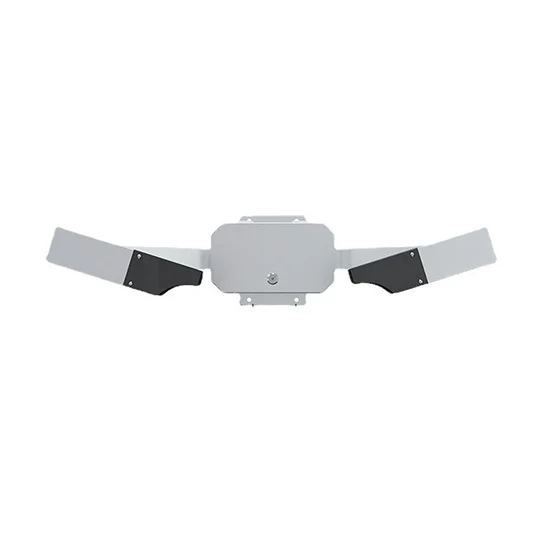
The visibility sensor can measure atmospheric visibility, and is designed based on the forward scattering principle of 35°. It uses infrared LED optical components, with the lens facing downwards and a protective cover, to reduce surface pollution of the probe and minimize maintenance needs.
Features
- The visibility sensor has a high protection level, adopts an integrated structure, and is coated with anti-corrosion fiberglass coating on the surface. It is resistant to rain corrosion and can adapt to long-term use in different environments.
- The sensor supports continuous measurement output, can continuously monitor atmospheric visibility, and ensure the safe operation of the equipment for a long time.
- Atmospheric visibility sensor supports fixed and mobile monitoring methods, and can be used in combination with the two monitoring methods to provide more accurate visibility information.
- The visibility sensor has strong anti-interference ability, and the optical unit is extinct inside to effectively prevent secondary stray light interference.
- It has strong protection, the optical component lens is facing downward and equipped with a protective cover, which effectively prevents precipitation, droplets or dust from entering the lens and reduces the pollution of the probe surface.
- The atmospheric visibility sensor measurement data can be uploaded to the cloud platform provided by us to view visibility data in real time.
Specification
- Model: ATO-RS-NJD-N01-1-*
- Power supply: 10~30V
- Range: 5-10000m/5-50000m/5-80000m
- Accuracy: ±10% (@25℃, 50%RH)
- Resolution: 1m
- Update interval: 20s
- MTBF: >18000h
- Working relative temperature: -40~60℃
- Working relative humidity: ≤95% (30℃)
- Weight: <10kg
- Output signal: RS485
- Peak wavelength: 875nm
- Power consumption: 0.5W
Dimension (mm)
Details
Wiring instructions
- Brown: Power supply positive
- Black: Power supply negative
- Yellow: 485-A
- Blue: 485-B
Applications
Tips: Precautions for installation of atmospheric visibility sensor:
- The instrument is installed approximately 2 meters above the ground.
- Do not have any other objects below to interfere with the test.
- The ideal installation site should be at least 100 meters away from large buildings or other facilities that generate heat and hinder rainfall.
- The venue should be free of obstacles, reflective surfaces, and obvious sources of pollution that interfere with optical measurements.
Reviews
There are no reviews yet.