
Description
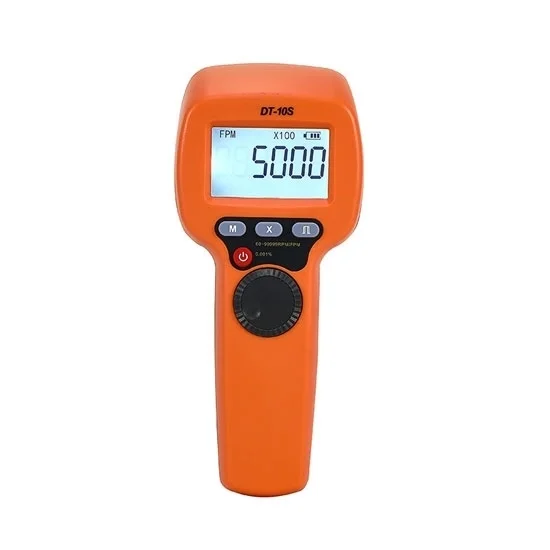
The LED stroboscope tachometer is a portable tool for measuring RPM and displaying results with LED strobe effects, suitable for industrial and laboratory applications, and for checking and adjusting the RPM of mechanical equipment.
Specification
| Model | ATO-DT-10S |
| Measuring Range | 60 fpm-99999 fpm |
| Speed Measurement Accuracy | 0.001% |
| Illuminance | 1500 lux |
| Display | LCD Display |
| Power Supply | 7.4V/ 2200mA Lithium Battery |
| Power Consumption | ≤ 0.2W During Operation |
| Operating Ambient Temperature | -10 ~ 55 ℃ |
| Dimensions | 210*57*90(mm) |
| Weight | 320g (including battery) |
Feature
- Accurate Measurement: With a high precision of 0.001%, the small tachometer delivers extremely reliable readings for dependable performance.
- Clear Display: Features an LCD screen with large digits for easy, effortless reading.
- Long Battery Life: The portable LED stroboscope tachometer is equipped with a high-capacity rechargeable battery that offers extended use per charge, saving cost and hassle.
- Durable Build: Operates reliably in temperatures from -10°C to 55°C, suitable for both indoor and outdoor use in all seasons.
- Compact & Portable: Designed to be handheld, lightweight, and with a built-in display for convenient on-the-go measurements.
Detail
Size (unit: mm)
Tips: How does LED stroboscope tachometer work?
The LED stroboscope tachometer works by emitting flashes of light at a specific frequency and interacting with the motion of a rotating object to measure its speed. When the flash frequency matches the rotation frequency of the object, the object appears to “freeze,” creating a stroboscopic effect. Specifically, the tachometer emits periodic flashes that illuminate the same point on the rotating object each time. When the flash frequency aligns with the object’s rotational frequency, the rotation appears to stop. By adjusting the flash frequency until the illusion of the object “standing still” is achieved, the tachometer can accurately display the rotational speed. Since it does not require physical contact with the object, this method is ideal for high-temperature, high-speed, or hazardous environments, offering a non-contact and precise way to measure rotational speed.
Reviews
There are no reviews yet.